DEVIL13 / EDITORIAL ARCHIVE / REAL EVENTS AND ARTIFACTS
The Phenomena Files
Real events. Strange evidence. Explanations that have to earn their place.
Tunguska was real. The Wow! Signal was recorded. The Voynich Manuscript and Antikythera Mechanism are genuine surviving artifacts. Their remarkable details are not a license to invent the answers. Each DEVIL13 file begins with the strongest identifiable records, traces serious explanations and states what remains uncertain.
These are non-fiction research dossiers, distinct from the entirely invented Inquiry Room training cases. The site is AI-assisted and edited from attributed sources; it does not claim to conduct expeditions, own archaeological artifacts or offer a live scientific service.
NEWEST DOSSIER / FILE 021 / NORWAY
The Hessdalen Lights: the mystery in the measurement
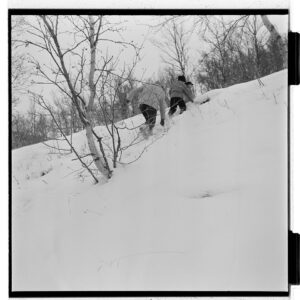

A Norwegian valley, decades of unusual light reports and a remarkable original 1984 field report. Investigators recorded radar echoes and photographs but also admitted incomplete coverage, poor spectra and ordinary lights in the sample.
File 021 reviews what 53 high-scored sightings, 36 radar recordings, the reported laser sequence and competing natural models actually tell us—without converting unidentified lights into proven vehicles.
Read the Hessdalen investigation → · Inspect the original 1984 report →
FEATURED DOSSIER / FILE 019 / JUNE 30, 1908
Tunguska: the explosion without a crater
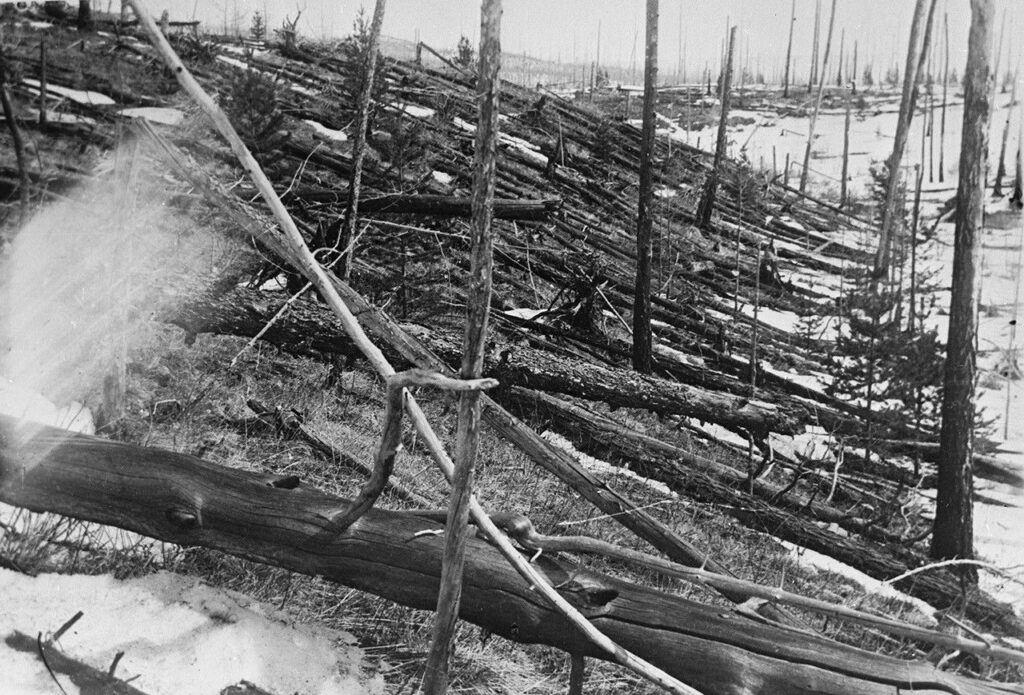
A blast over a remote Siberian forest damaged an enormous area, yet no conventional main impact crater was established. NASA’s airburst models explain much of the destruction. The exact object and a separate scientific disagreement about nearby Lake Cheko remain worth examining without supernatural shortcuts.
The evidence: testimony, tree-damage surveys, geophysical observations, modelled fragmentation and a peer-reviewed crater debate.
What it cannot tell us: the precise composition of an unrecovered body or the truth of a popular extraordinary origin story.
THE DIRECTORY / RESEARCHED, NOT SIMULATED
Where evidence meets the unfamiliar
01 / RADIO ASTRONOMY
The Wow! Signal, 1977
A genuine narrowband radio detection, no confirmed repeat, and a continuing debate about its natural or artificial origin.
02 / UNREAD TEXT
The Voynich Manuscript
A surviving illustrated manuscript with a real institutional shelfmark and no widely accepted decipherment. Separate the object from later claims.
03 / ANCIENT ENGINEERING
The Antikythera Mechanism
A genuine Greek mechanical device whose recovered fragments and reconstruction show surprising technical sophistication; the detailed design is still being studied.
Each linked story is a real-world research synthesis, not evidence of a paranormal cause. An unresolved detail is not the same as an unexplained event in its entirety.
Browse the complete Phenomena Files article archive → — a chronological category archive that expands as new non-fiction dossiers are published.
THE SOURCE DESK / ORIGINAL RECORDS
Start with the evidence, not the legend
These institutional and first-person records do not magically resolve a mystery. They help establish what was actually documented and where our later interpretation begins. The links open the original research sources; the DEVIL13 dossiers explain the limits and disputes.
1908 / LATER SURVEYS
Tunguska — NASA archive
NASA’s historical overview of the explosion, witness accounts and later Leonid Kulik expeditions.
Evidence limit: Its 1920s photographs are not images of the June 1908 blast
1977 / INSTRUMENT HISTORY
Wow! — Ehman’s account
Jerry Ehman’s technical retrospective of the Big Ear detection and what the printed sequence actually recorded.
Read the observatory account →
Evidence limit: The signal intensity printout does not reveal a decipherable message
MANUSCRIPT / INSTITUTIONAL HOLDING
Voynich — Beinecke Library
Yale University’s record of the authentic manuscript and its place in the Beinecke rare-book collection.
Evidence limit: Owning and cataloguing an object does not decipher its writing
ARTIFACT / ARCHAEOLOGICAL CONTEXT
Antikythera — Greek Ministry
A Greek Ministry of Culture resource describing the recovered Antikythera mechanism and its historical significance.
Evidence limit: Surviving fragments still require reconstruction of some functions
If a source page changes, consult the linked full investigation for alternative archival references and research notes. Use the Historical Source Record to keep the institution, object identifier, observed material, interpretation and unresolved question together.
Four questions we ask every file
A / THE OBJECT
What exists?
Identify a specific event, artifact, text, instrument record or surviving physical trace—not only a modern retelling.
B / THE RECORD
Who documented it?
Check the original institution, date, later reprints, eyewitness collection and the chain linking a claim to its source.
C / THE EXPLANATION
What actually follows?
Compare serious models and alternatives by their testable predictions and observed fit, rather than their novelty or popularity.
D / THE REVISION
What would change it?
A trustworthy new measurement, an earlier document, a decisive independent test or an error correction can change our public finding.
The four steps are an editorial workflow, not a claim that all unresolved questions have been solved. Some questions remain open because the physical record is incomplete, others because interpretations compete.
CONTINUE YOUR INVESTIGATION
From the unusual to the verifiable
- Night-Sky Evidence Kit — thirteen self-guided checks for recording a light, preserving a file and testing familiar sources without unsafe experiments or unsupported conclusions.
- The Forbidden Library / Source Desk — research actual manuscript holdings, scans and provenance.
- Image Evidence — learn why image origin and caption accuracy require separate checks.
- What Does a Timestamp Prove? — creation, upload and archive dates are different evidence.
- Research Trails — free guided reading across related questions and exercises.
- The Inquiry Room — clearly fictional teaching cases where you can practise challenging explanations.
If you find a contradictory source, use Contact & Corrections and include the article, source and claim. These files are maintained through editorial revisions, not an always-on autonomous data feed.
Archive opened November 21, 2026; observation guide added November 23, 2026. No promotional payments, lab tests or field investigations are implied by the editorial selection.