FILE 021 / THE PHENOMENA FILES / NORWAY’S LIGHTS
Bright lights in a Norwegian valley. A five-week campaign with cameras, radar and magnetometers. Decades of reports that don’t all describe the same thing. Hessdalen is worth investigating precisely because the records include both intriguing observations and frank admissions of what the instruments could not establish.
Working finding: Observers recorded unusual luminous events, and a 1984 project tried to document them using multiple instruments. Neither the project’s classification labels nor isolated radar returns prove a single unknown physical mechanism, let alone a vehicle or intelligence.
Explore: the 1984 fieldwork · radar returns · spectral limitations · the laser claim · natural hypotheses · modern monitoring · evidence assessment · source desk
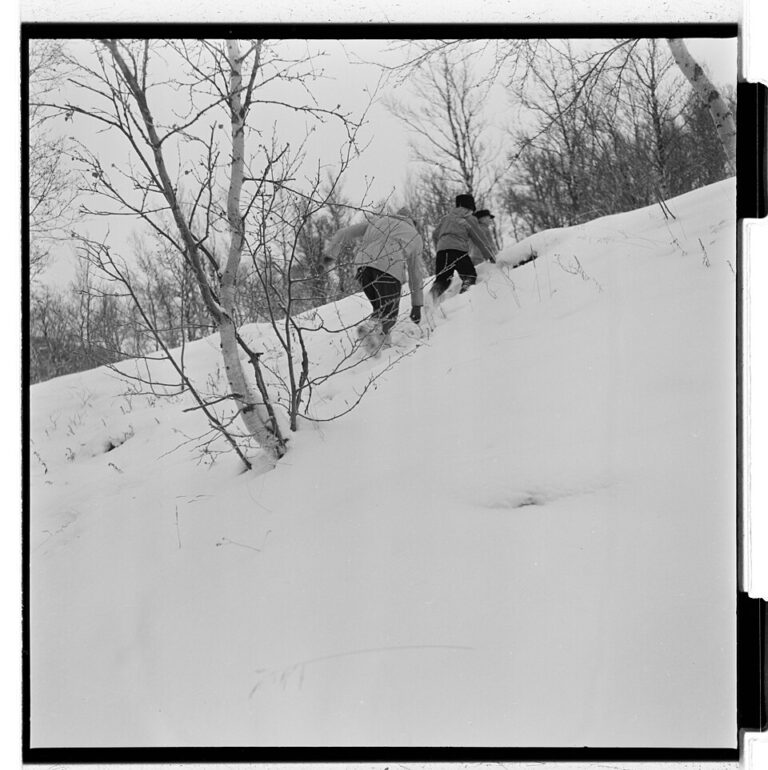

The setting matters. The valley is mountainous, dark in winter and home to distant roads, buildings and changing atmospheric conditions. Appearance alone rarely fixes a light’s distance, height or size. That makes an observation log, calibration reference and independent measurement more valuable than an isolated beautiful photograph.
How the investigation began
Reports of unusual lights in Hessdalen, central Norway, intensified around 1981–1984. Project Hessdalen was formed in 1983. It carried out a coordinated field investigation from January 21 through February 26, 1984, led by Erling P. Strand. The researchers used observers at several positions plus cameras, optical gratings, radar, a seismograph, a spectrum analyzer, a magnetometer, an infrared viewer and other tools. Their full contemporaneous 1984 technical report is publicly available.
The famous figure of 53 observations needs context. The team’s report lists 188 recorded sighting reports overall and divides them using an internal ‘F’ score for perceived strangeness and a separate ‘G’ score for how much supporting detail was available. Fifty-three reports received F5 or higher and were grouped under the team’s Hessdalen-phenomenon category. That was a working classification by investigators, not proof of 53 scientifically established new physical entities.
The same summary explicitly includes familiar objects, including 86 reports in the lowest F1 class, which the report associates with known lights. The field team acknowledged that aircraft records would have improved identification. Careful reading of the original classification table is more informative than repeating ’53 unexplained craft’ as though every case was independently verified.
The group catalogued both optical observations and instrument anomalies, and also noted that coverage was not continuous because of limited personnel. An observation may be honestly recorded without its origin being identified.
What the radar results can—and cannot—show
The 1984 report lists 36 radar recordings, of which three were associated with lights observed by people. At other times, the radar displayed returns when witnesses saw no corresponding unusual light. The investigators considered possible reflections from solid objects as well as strong atmospheric gradients or ionized regions. These options make an important point: a radar echo is a radar measurement, not automatic proof of a solid vehicle.
A particularly dramatic interpretation sometimes quoted from the report is a speed of about 30,000 kilometres per hour, derived from a short series of radar returns and timing assumptions. The historic report documents that calculation; it does not demonstrate an independently tracked craft moving at that speed. Establishing the speed of an object requires verifying that sequential returns belong to the same target, with calibrated geometry and uncertainty.
If visual sightings coincide with radar positions, that can strengthen a case that the instrument recorded something relevant. But only three linked events out of 36 returns in the original summary, incomplete instrument watching and uncertainty about distance limit how much can be inferred from the whole collection. The original author himself noted that the radar and spectrum-analyzer screens were not observed continuously. Read sections 3.4 and 4.3 rather than relying on a stripped-down speed claim.
Spectral photographs: a revealing limitation
An optical grating can spread light by wavelength, potentially helping distinguish emitted or reflected light and constrain candidate sources. But a spectrum is useful only if the object and light are well characterized, the camera is calibrated and known light contamination can be excluded.
In the original campaign, seven grating films produced just four images usable for some sort of spectral inspection. The stronger images were associated with a case rated F5, at the threshold the researchers allowed as possibly ordinary. The author specifically warned that these images could not prove the unknown Hessdalen phenomenon had a continuous spectrum. Faint images were inconclusive; contamination from higher-order spectra of known lights and short exposures were acknowledged.
This is not a failure to observe anything. It is a useful example of the difference between collecting light on film and obtaining a calibrated spectrum that identifies the physical source. Later optical work made further measurements, but a spectrum alone does not automatically identify an energy mechanism or show that all reported lights have the same source.
Did a laser cause the lights to change their rhythm?
One of the most memorable parts of the 1984 report describes two lights seen on February 12. According to the team’s account, a laser was pointed toward the lights on nine occasions, and the observers reported changes from single to double flashes on eight of them. The observer using binoculars reportedly could not see the laser’s direction, an attempt to reduce one source of expectation.
It is an interesting reported observation, not a controlled demonstration of communication. The tests were conducted during two observation episodes, without randomized laser-on/off timing or independently recorded light-intensity time series adequate to separate spontaneous rhythm changes, perceptual effects and laser influence. The full report’s language is investigative and tentative. A response-like pattern can be studied without assigning agency to the source.
A stronger follow-up would pre-register control periods, record synchronized video and the laser state independently, use calibrated photometry and repeat the result on multiple occasions. Until then, the honest statement is that Strand and colleagues reported a striking association in limited conditions. The report cannot establish why it happened.
Magnetic readings, earthquakes and ‘no heat’
The research team looked for connections with seismic and magnetic activity. No local seismic events were recorded by their instrument during that campaign. They also found no simple correlation with slowly varying magnetic readings. A four-of-ten coincidence between higher-rated visual reports and magnetometer pulsations was observed during the short interval when faster monitoring was available. The report itself notes that pulses were common at the time and that chance coincidence was possible.
Similarly, the original report says its infrared viewer was used only twice, on relatively distant lights, and was not sufficient for a conclusion. The Geiger counters did not show a clear increase during observations, but they were not close to the reported lights. It would be inaccurate to turn those constrained non-detections into universal claims that Hessdalen lights emit absolutely no infrared energy or radiation.
The broad lesson: one instrument result is useful only after asking whether the sensor was in range, running at the right time, sufficiently sensitive and properly synchronized with the visual observation.
A single origin—or several ordinary and unusual causes?
An apparently similar light may come from an aircraft, road vehicle, satellite, meteor, atmospheric optics, camera artifact, a local electrical discharge or some less understood luminous process. The official Project Hessdalen website’s image examples explicitly illustrates known phenomena such as airplanes, satellites, insects, headlights, auroras, light pillars and reflections. That is useful evidence that investigators do not treat every bright spot on a camera as an anomaly.
One physical proposal is a dusty plasma mechanism involving atmospheric particles and ionization associated with radon decay. G. S. Paiva and C. A. Taft published a 2010 paper in the Journal of Atmospheric and Solar-Terrestrial Physics proposing this possibility. Its very title calls the mechanism hypothetical. A model that can resemble some reported shapes or spectra is a candidate explanation, not proof that the process caused a particular field event.
Other speculative ideas focus on geological chemistry, local electrical effects and plasma processes. A serious test would compare predictions—spectrum, duration, distance, correlated weather and geology, and repeatable location—to independently recorded observations. It would also seek ordinary-source controls before assigning every sighting to a single new phenomenon.
Nothing about a limited or currently unknown explanation establishes a spacecraft, non-human intelligence or a new energy source. Likewise, merely naming a familiar object does not settle a well-documented observation unless its predicted position, time and appearance match the recorded event.
Why monitoring matters more than a viral photograph
Project Hessdalen’s automatic monitoring station, nicknamed the Blue Box, began operating in 1998. The current citizen-science organization hosts archives of photographs, video and its field reports. According to its current images-and-videos page, camera equipment was upgraded in 2025 and many everyday visual sources are included in its educational examples.
A continuously running camera creates a chance to compare the unusual moment with the minutes before and after. Multiple stations with synchronized clocks can help triangulate distance and height. Spectra and calibrated photometry can constrain emission mechanisms. Known aircraft and satellite data can test simpler identifications.
A recording labelled by automated anomaly software still requires human and instrument-level validation. A bright point on one camera is not enough to establish distance, speed, size or material composition. Responsible monitoring should store raw files, environmental conditions and the software version or detection threshold used to flag the event.
DEVIL13 evidence assessment
What is firmly documented
The valley attracted many reports; Project Hessdalen operated a field campaign in 1984 and collected visual and instrument observations. Its original report and detailed log are publicly accessible. The 53 higher-scored observations are a project classification, not fifty-three scientifically proven new objects. The later Blue Box monitoring infrastructure and institutional archive are also documented.
What instruments support—and where interpretation starts
Radar returns, photographs and some magnetometer coincidences were recorded. The report also identifies partial coverage, weak spectral photographs, known-light contamination and imperfect aircraft exclusion. These are genuine measurement records and methodological limitations; the source and identity of any given light require case-by-case checking.
What remains unresolved
Some observations were not identified by the investigators, and a unified explanation covering every report has not been demonstrated. It is not established that all higher-scored cases share one physical mechanism. A proposed dusty-plasma model is explicitly hypothetical, not a confirmed universal cause.
What evidence could change the assessment
Synchronized independent cameras with calibrated spectral and photometric records, simultaneous verified radar data, robust source-exclusion logs and repeatable environmental measurements would help distinguish classes of causes. A confirmed predicted spectral fingerprint or reproducible transient source could support a physical model. More repeated anecdotes alone would not replace an instrumented measurement.
Bottom line: Hessdalen is a researchable set of unusual light reports and partially documented observations, not an officially identified alien craft or a fully solved natural effect. The compelling story is the tension between measurement, imperfect data and serious open questions.
Source desk and how to check this file
- Erling P. Strand, Project Hessdalen (1984), original Final Technical Report — definitions of F/G ratings; full campaign results, numerical counts, calibration difficulties and self-critique.
- Project Hessdalen, observation log (1984) — dated field notes; these remain investigators’ observations, not externally verified identifications.
- Project Hessdalen, About (Erling P. Strand, 2025) — modern organization, historical timeline and project scope; claims are attributed to the organization.
- Project Hessdalen, Image Examples — recognized ordinary phenomena in automated camera views.
- Project Hessdalen, Pictures and Videos — Blue Box history and links to field imagery.
- Paiva & Taft (2010), A hypothetical dusty plasma mechanism of Hessdalen lights — hypothesis in a peer-reviewed journal, not a field-confirmed identification.
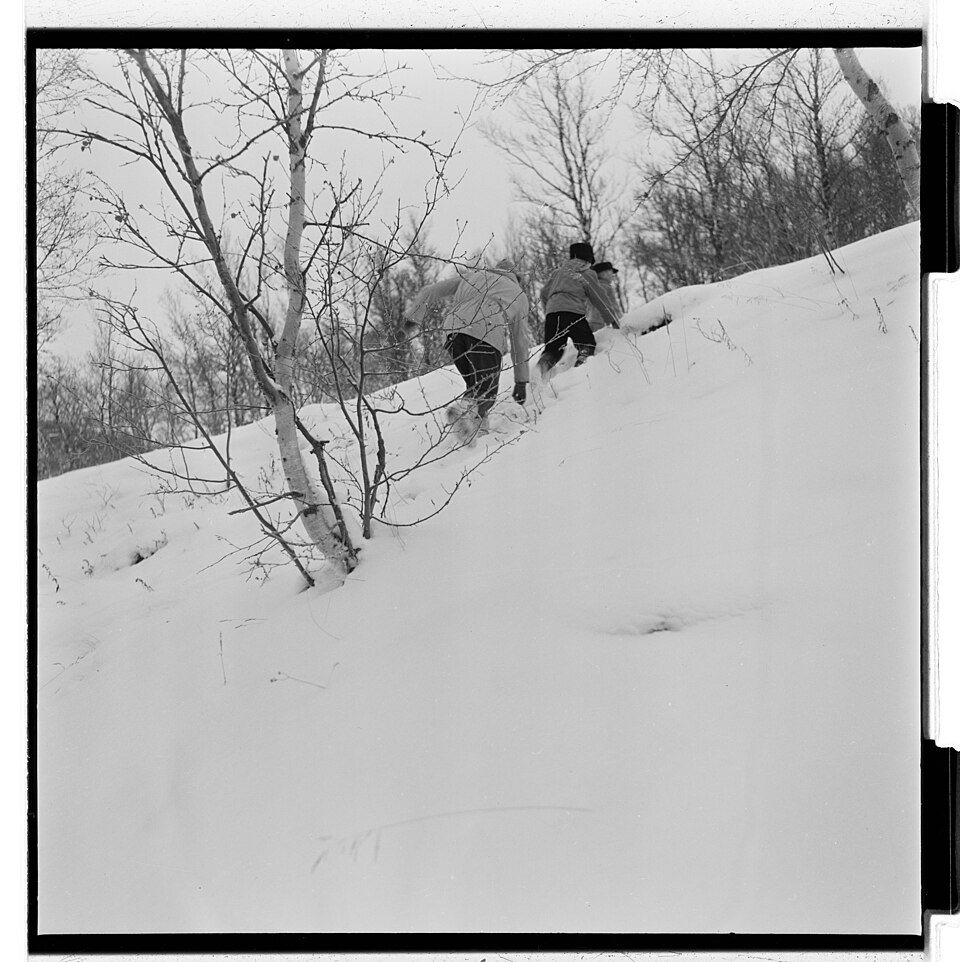
- National Archives of Norway / Wikimedia Commons, Hessdalen, 1953 — archival landscape photograph, CC BY-SA 4.0, unmodified; unrelated to any particular light observation.
DEVIL13 research synthesis prepared November 23, 2026. The report was reviewed from its publicly accessible original HTML transcription. This is not independent fieldwork or a new radar/spectral analysis. Model proposals and the project organization’s claims are attributed to their authors. The photographic image depicts the 1953 landscape only, not a verified anomaly. Changes to interpretations will be documented when better evidence becomes available.
Explore the Phenomena Files for other documented mysteries, or read the Wow! Signal to compare how a strong one-off instrument reading can be real without its origin being known. Use the Evidence Field Notes or Source Trail Record when checking a specific reported light.
Observe something yourself? Use the Night-Sky Evidence Kit: 13 checks to preserve time, direction, unedited media and alternate explanations before drawing a conclusion. This is a self-guided reference; it does not collect reports.