DEVIL13 / The Forbidden Library / Symbols & History / November 15, 2026
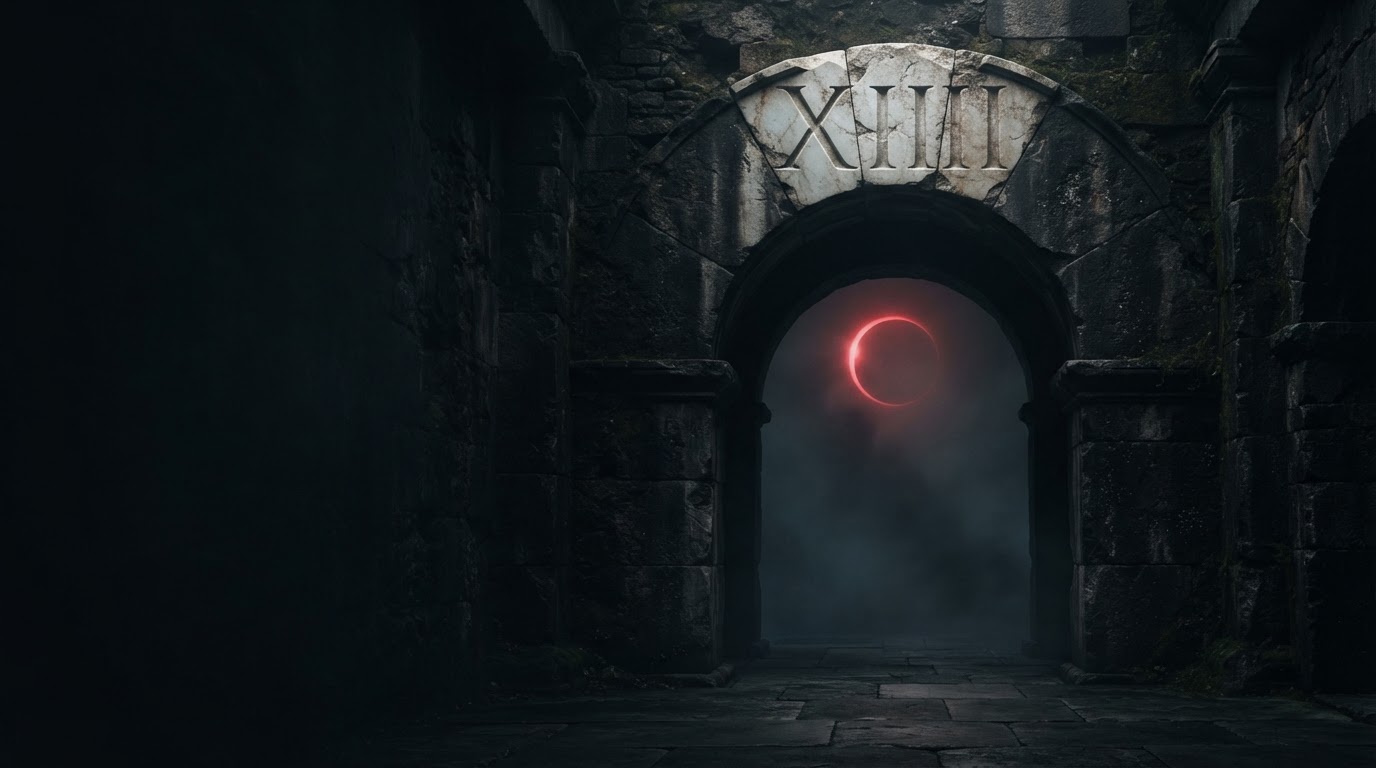
The featured artwork is an original AI-generated conceptual illustration of the symbolism of thirteen.
Why does the number 13 feel ominous? The shortest answer is cultural inheritance: people encounter stories, traditions and jokes that make the number seem different from its neighbors. The harder question is how the stories began—and whether the most famous explanations are actually supported by historical sources.
DEVIL13 adopts thirteen not as a declaration of evil or supernatural power, but as a symbol for the question that sits just beyond a comfortable set of answers. That symbolic choice makes the history worth examining carefully.
The useful distinction: 13 versus Friday the 13th
A tradition that treats thirteen as significant is not the same as a belief that every Friday falling on the thirteenth brings misfortune. Stories about unlucky gatherings, old religious associations and the combined calendar date have different histories. Treating them as one timeless superstition makes the question impossible to answer.
In a detailed 2024 investigation for the Library of Congress, folklorist Stephen Winick follows the printed record and shows how the combined Friday-the-thirteenth belief can be traced through nineteenth-century European writing into American newspapers. That does not identify the first person ever to fear the date; it shows the earliest documentation researchers have located so far.
A trail of evidence, not a single ancient origin
Winick points to French printed references from 1834 that associate Friday and the thirteenth with misfortune. By 1858, French theatrical dialogue treated Friday the thirteenth as an unlucky date. Translations of French plays and jokes helped introduce or reinforce the association in the United States; later nineteenth-century newspapers feature the date often as a subject of humor.
The evidence is particularly revealing because a superstition can spread even among people who do not share it. Readers repeat that other people fear thirteen; newspapers laugh about it; social clubs challenge it; movies turn it into entertainment. At every stage the cultural symbol grows more familiar, whatever an individual reader believes.
The New York Thirteen Club made the point in reverse. According to Library of Congress research, it staged its first dinner on Friday, January 13, 1882, embracing the supposedly unlucky combination as an act of defiance. That is evidence that the idea was recognizable by then, not evidence of some ancient curse.
Three famous origin stories under inspection
- The Knights Templar: The French crown moved against the Templars on Friday, October 13, 1307. The historical date is real. The claim that it created the modern superstition is not established by contemporary evidence. The specific connection appears much later.
- Loki at a banquet: The frequently repeated story says Loki arrived as an unlucky thirteenth guest at a gathering of gods. Winick notes that the principal medieval sources for the death of Baldr do not describe the crucial thirteen-person dinner scene. That is an important gap in this particular origin story.
- Hammurabi and a missing thirteenth law: The ancient law text is not numbered on its original stone. A missing number in a modern edition cannot prove that ancient Babylonians feared thirteen.
These cases illustrate a phenomenon folklore scholars call metafolklore: a story about a folk belief can be attractive enough to become another piece of folklore itself. A compelling explanation may spread faster than the documents needed to verify it.
What about the Last Supper and the tarot Death card?
Christian interpretations of the Last Supper have been connected with thirteen because Jesus and the twelve disciples form a group of thirteen. But the familiar claim that Judas was definitively the ‘thirteenth guest’ is not supported by a biblical arrival order or seating chart. The scene may be part of the number’s cultural associations without giving us an exact point of origin.
There is also a long visual connection between the number thirteen and the tarot Death card. Winick cites sixteenth-century documentation of that numbering. It establishes that an association of thirteen with the image of Death existed in that context; it does not demonstrate that a card caused an entire culture to fear the number.
Does the number 12 explain the number 13?
Twelve is useful in daily life: it divides easily into halves, thirds, quarters and sixths, and it appears in months, clock faces and many symbolic systems. An intuitive story says that thirteen feels disruptive because it exceeds an orderly dozen. That is an interesting explanation, but as the Library of Congress discussion emphasizes, we should not mistake its elegance for established historical proof.
This is how a good investigation can frustrate a neat headline. Several explanations may contribute to a tradition across different places and centuries. Some are well documented as beliefs, yet uncertain as causes. A single universal origin may not exist.
The symbol doesn’t dictate the experience
A number is not an agent that chooses outcomes. Its social meaning is shaped through ritual, literature, architecture, individual memory, religion, humor and popular culture. The symbol can evoke dread for one person and playful rebellion for another.
For DEVIL13, that ambiguity is precisely the appeal. There are thirteen doors because a question can be more useful than a warning. Each door asks the reader to separate what a symbol means to someone from what a historical or scientific claim can establish.
What the records support
- Documented: Negative associations with thirteen have existed in different traditions; the combined Friday-the-thirteenth belief appears in nineteenth-century French sources and later American print culture.
- Interpreted: Religious scenes, number symbolism, games, social imitation and entertaining stories may all have contributed to the number’s reputation.
- Not established: A single definitive ancient event that made thirteen universally unlucky, or evidence that the number itself influences misfortune.
The question worth carrying into the next room is not ‘Is thirteen cursed?’ It is: How do ideas become so familiar that their origins no longer seem to need checking?
Research sources
- Stephen Winick, Library of Congress (December 12, 2024), On the Possible Origins of Friday the Thirteenth: Metafolklore, Fear, and Fun. Detailed historical-source analysis.
- Stephanie Hall, Library of Congress (January 12, 2017), Who’s Afraid of Friday the Thirteenth?. Earlier folklife overview; read alongside the more detailed 2024 review.
- Smithsonian Libraries: Nathaniel Lachenmeyer, 13: The Story of the World’s Most Notorious Superstition. Bibliographic record of a book-length study.
- HISTORY.com, What’s So Unlucky About the Number 13?. Secondary overview; some broad historical theories require the caveats above.
Method note: Original DEVIL13 synthesis of published research, not firsthand archival discovery. Historical claims reviewed November 15, 2026. See Our Method and try Door 01: What Can Be Known?